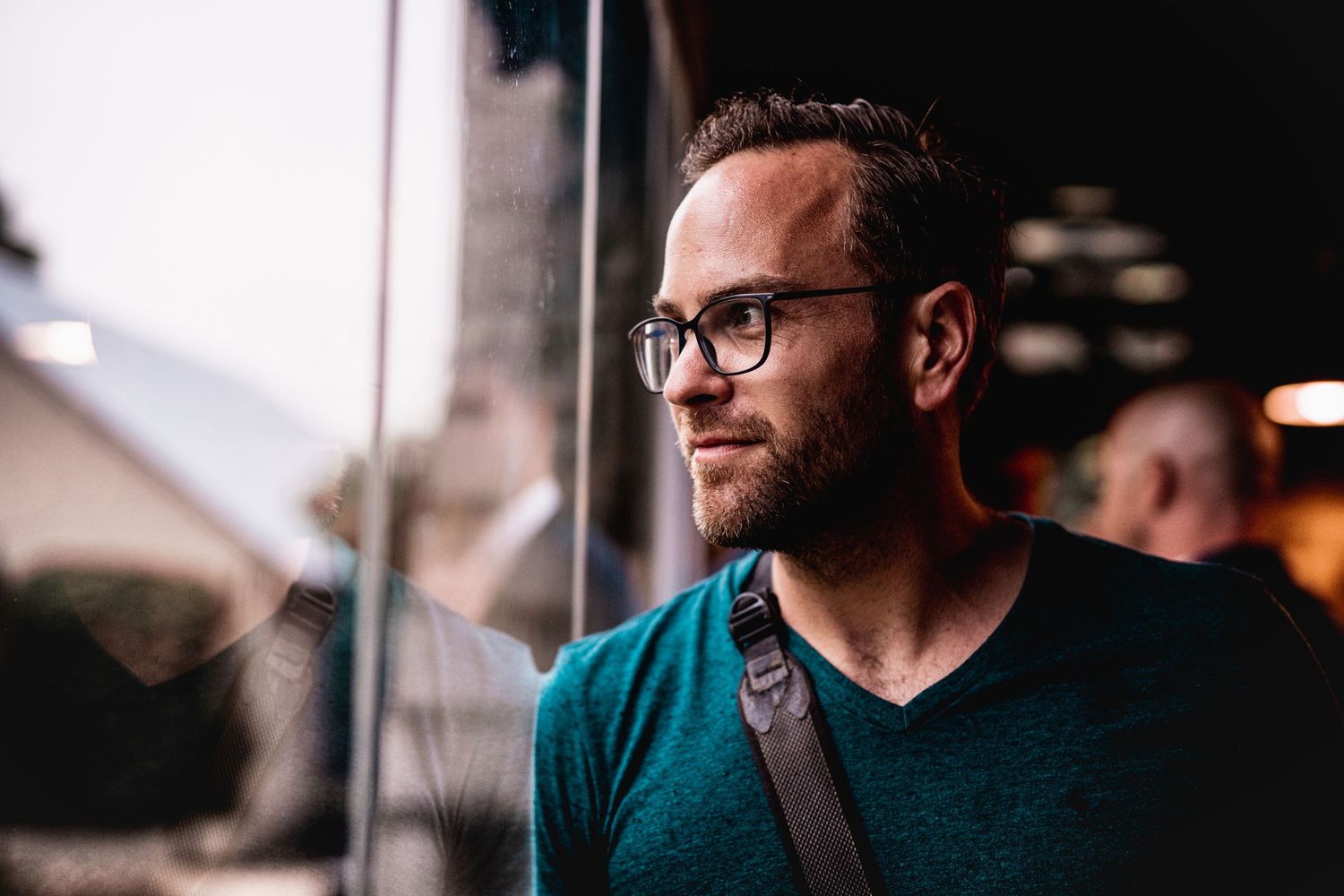
Enter a Heading
For a long time, I thought good portrait photography meant refinement.
Better light.
Better posture.
Better expression.
And there’s nothing wrong with that. Precision matters. Craft matters.
But recently I went back through years of my own work looking for the images that felt completely unforced. The ones that still had weight.
Most of them were from weddings and from children.
Moments where I wasn’t directing much at all. Where I was simply watching.
That observation has shifted something in me.
I’m becoming less interested in improving moments and more interested in recognising them.
That, to me, is where authentic portrait photography begins.
What Authentic Portrait Photography Actually Means
Authenticity has become a marketing word. It gets attached to everything.
When I use it, I mean something specific.
Authentic portrait photography is not messy. It is not careless. It is not unconsidered.
It is deliberate and patient.
It means creating an image that still feels like you when the camera is gone.
It means photographing someone in a way that does not feel like a performance of who they think they should be.
In practice, that often looks like:
• Working in real environments rather than neutral backdrops
• Using natural light wherever possible
• Directing gently rather than constantly
• Allowing silence before lifting the camera
• Watching for the small shift in expression when someone settles
The most revealing expression is rarely the biggest smile. It often appears right after someone finishes speaking. There’s a brief reset. A moment where they return to themselves.
That is usually when I press the shutter.
Why This Matters in South Africa
South Africa is layered.
Culturally. Historically. Architecturally. Emotionally.
The environments here carry texture. The light is generous. The spaces people live and work in tell stories before anyone says a word.
Authentic portrait photography in South Africa should acknowledge that context.
A creative in their studio in KwaZulu-Natal.
A founder in their workspace in Ballito.
An architect surrounded by the structures they think about daily.
The environment is not decoration. It is part of the portrait.
When a photograph makes sense in its location, it feels anchored. It feels coherent.
Authenticity is not about stripping everything back. It is about making sure everything belongs.
The Difference Between Looking Impressive and Looking Real
In professional portrait photography, especially for personal branding, there is pressure to impress.
Stand taller.
Look more confident.
Project more authority.
We subtly push people toward a heightened version of themselves.
And again, there is nothing inherently wrong with that.
But I have found that overly polished portraits often feel dated within a few years. They reflect a trend or a moment of aspiration.
Honest portraits tend to last longer.
They feel steadier.
When someone looks at them years later and still says, “That feels like me,” then the image has done its job.
Authenticity is not less professional. It is simply less exhausting.
Personal Branding Without Acting
Much of my portrait work in South Africa involves professionals, creatives and founders who need strong imagery for their websites, profiles and media.
The question I always come back to is this:
Are we trying to construct an identity, or reveal one?
Personal branding photography should not feel like acting. It should feel like clarity.
Confidence does not require exaggeration. Authority does not require theatrics.
A portrait rooted in authenticity communicates intelligence, credibility and presence without shouting.
That subtlety is often more powerful than intensity.
Natural Light, Minimal Interference
I rely heavily on natural light.
Not because artificial light is wrong, but because natural light carries nuance. It shapes gently. It leaves room for texture and imperfection.
When I do use artificial light, it is there to support, not dominate.
I am not trying to transform someone. I am trying to see them clearly.
The same applies to direction.
Every session needs some guidance. People are not always comfortable in front of a camera. But there is a difference between guiding and controlling.
My role is observational first, interpretive second.
I watch. I listen. I wait.
If I feel myself trying too hard to improve the moment, I usually stop and reset.
The goal is not to manufacture depth. It is to recognise it.
Silence as a Tool
One of the most important tools in authentic portrait photography is silence.
Many sessions are filled with constant chatter. Instructions. Reassurance. Adjustments.
Silence can feel uncomfortable.
But in that space, something changes.
People stop performing. They stop holding a pose. They settle.
That settling is where honesty appears.
And honesty is what makes an image endure.
Who This Is For
Authentic portrait photography is not for everyone.
It is not for people who want something dramatic or heavily stylised.
It is for people who value depth over spectacle.
For creatives who do not want to be reduced to a trend.
For professionals who want credibility without exaggeration.
For individuals who are comfortable being seen as they are.
If you are based in South Africa and want portrait photography that feels grounded, contextual and honest, this approach may resonate with you.
Where I Am Moving
I am less interested in polish than I used to be.
Less interested in creating moments.
More interested in recognising them.
That shift is shaping how I approach portrait photography across South Africa, particularly here in KwaZulu-Natal.
The work is quieter. Slower. More deliberate.
It asks for patience from me and from the person in front of the camera.
But the results feel different.
They feel steady.
And in a world of constant performance, steadiness feels like something worth pursuing.
If you are looking for authentic portrait photography in South Africa and value presence over artifice, the starting point is a conversation.
Not about poses or trends.
About who you are, and how you want to be seen.

